






Editor & Publisher: Rabb Majumder
House # 05 (2nd Floor, 2-C), Road# 04, Banani DOHS, Dhaka - 1206
Phone: +8801715822782
Phone (Advertisement): +8801712863234
Email: rabb.h.majumder@gmail.com, info@securityworldbd.com

China–Myanmar–Bangladesh Corridor: Opportunities, Challenges and Regional and Global Responses
Jonaed Khan
11:01, 23 November, 2026

Jonaed Khan is working as a Research Analyst at the Osmani Centre for Peace and Security Studies (OCPASS).
Introduction
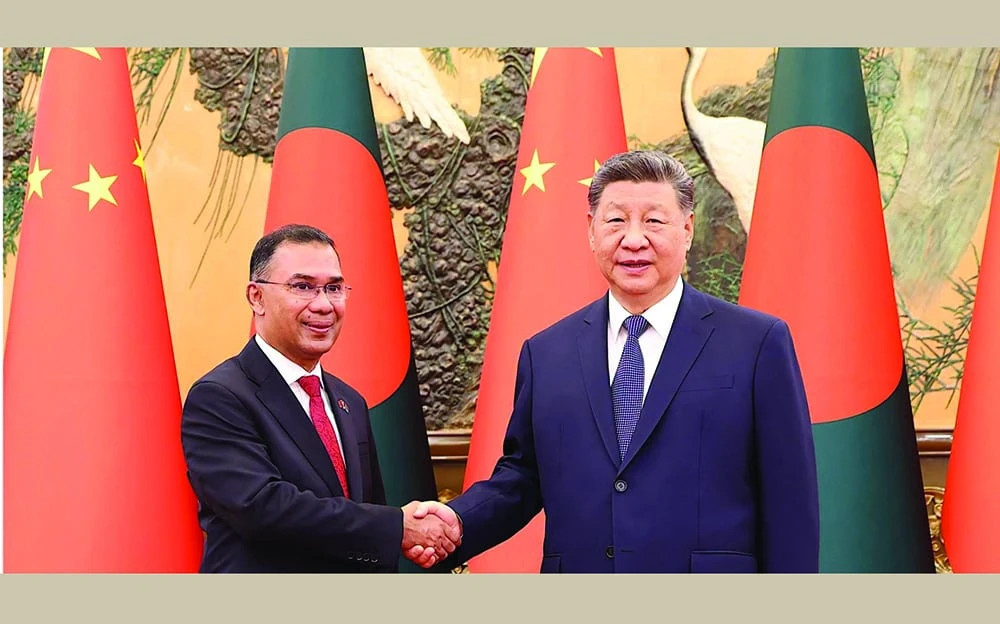
During Prime Minister Tarique Rahman's maiden visit to China, many issues were discussed, evident in the third joint communiqué between Dhaka and Beijing. Several Memoranda of Understanding (MOUs) were signed, and prospects of elevating the strategic partnership and increasing cooperation were reviewed.
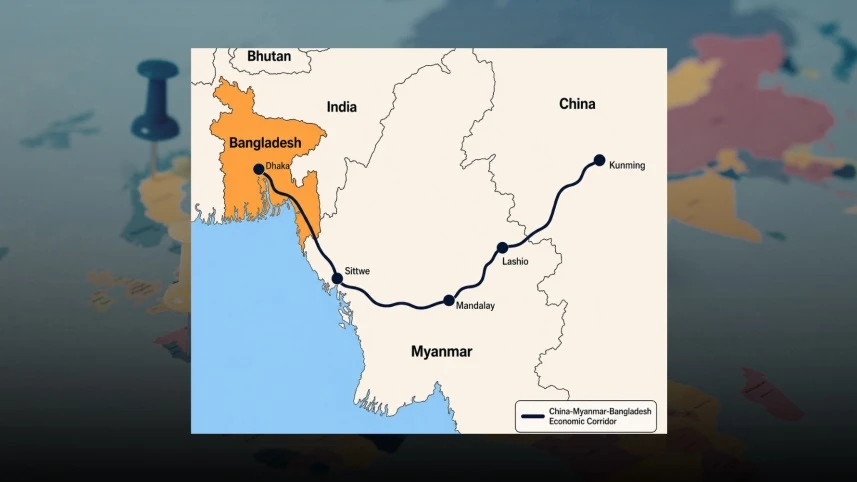
However, one proposal from the Chinese Side drew the attention of local, regional, and global media, scholars and leaders, and that is the proposal of a China-Myanmar-Bangladesh Economic Corridor (CMBEC). Now, the corridor issue is not something out of the blue. An almost similar corridor was proposed in August 1999 during the Kunming Initiative in Kunming, China. Later, in 2015, China came up with the idea of the Bangladesh-China-India-Myanmar Economic Corridor (BCIMEC) as part of its global connectivity initiative- the Belt and Road Initiative (BRI).
Though there was much enthusiasm in the primary stage of this project, it did not come to fruition due to India’s suspicion toward the Chinese connectivity project, which it sees as a way of encircling India (Lowy Institute); its concern over the security implications for the North Eastern Region; increased competition between the US and China over influence in the wider Indo-Pacific region; and Myanmar’s volatile situation.
However, instead of waiting for all four members of the BCIM to reach an agreement, China advanced through a phased approach. Though the BCIM corridor was not established, a corridor from China to Myanmar was built, named the China-Myanmar Economic Corridor (CMEC). And now China intends to stretch that connection to Bangladesh, keeping the door ajar to India. For China, this corridor may become another potential gateway between Yunnan and the Bay of Bengal, and for Bangladesh, this corridor may offer more access to China’s western provinces, improved bilateral relations, economic and development partnerships, and improved connectivity with Southeast Asia.
Following
the proposal of the corridor, different scholars and experts expressed their
opinions and analyses from different perspectives. Some of that literature
looked at the issue only from an economic point of view, some from a security
perspective and some from the perspective of global and regional powers’
response to this. However, what is missing is a comprehensive analysis of the
corridor issue. This article will be a humble contribution to that gap, and it
will try to identify the hurdles in establishing such a connectivity route,explore
the opportunities that Bangladesh can achieve from this corridor,the regional
and global response to this, and finally,ways for Bangladesh to balance among regional
and global dynamics.
What are the hurdles?
Besides
numerous benefits, there are certain challenges associated with this corridor.
The first and foremost challenge is the security situation in Myanmar,
especially in Rakhine State. The corridor is highly dependent on stability and
connectivity through Myanmar, a country that is heavily fragmented by political
and armed conflict since the military coup in 2021. Different ethnic armed
organisations (EAOs) control different areas of the country. In 2023, the
Arakan Army (AA), along with its two key allies- the Myanmar National
Democratic Alliance Army (MNDAA) and the Ta’an National Liberation Army (TNLA)
launched a major offensive operation against the Junta, capturing a vast swath
of territory and critical trade routes. As of now, the AA controls 14 of the 17
townships in Rakhine as well as another township called Paletwa in Chin State.
It is now the de facto controller of Rakhine State and the 271 km border with
Bangladesh, through which any overland connectivity is likely to pass.
Therefore, any planning of the corridor must consider how the AA is going to
respond to that.
The proposed corridor route will also pass through Shan State, another conflict-prone area, which is identified as a patchwork of neighbouring areas governed by various EAOs. The Junta’s loss of control has enabled non-Shan State armed groups to seize territory and resources there. The active EAOs of Shan State are the AA, MNDA, the Kachin Independence Army (KIA), the TNLA, the Shan State Army-North (SSA-N), the Shan State Army-South (SSA-S), the United Wa State Army (UWSA), and some other smaller groups. While some of the EAOs have joined the revolution against the Junta, others have sided with the Junta. Different armed organizations are also fighting among themselves to get control of territory and resources. More in-depth analysis suggests that there is also fighting within supposed allies, as they often pursue different objectives and attempt to gain a certain amount of autonomy and control. Therefore, stability in Shan State is also a major concern before implementing this corridor.
A conflict economy is being run by different EAOs in Myanmar. Chinese investments have already been affected by the security conditions there. A $140 million Chinese facility jointly run by the Chinese state-owned China National Technical Import and Export Corporation (CNTIC) and Hong Kong-listed VPower Group was considerably dismantled and relocated in 2026 as fighting drew closer to its position in Rakhine. The rail link is even less developed. A feasibility study in 2019 estimated that the 431-kilometre Muse-Mandalay railway would cost $9 billion and take a considerable time, but it has made limited progress due to disruptions in the region. Experts also cautioned that infrastructure passing through conflict-prone areas could inadvertently strengthen armed groups by creating new sources of revenue generation, requiring a prior comprehensive security assessment.
China
brokered a ceasefire between the junta and the MNDAA and TNLA (two of the three
brotherhood alliances) in January 2025, but that agreement is yet to produce a
broader political settlement. In addition, the AA, the group most relevant to
the Rakhine corridor, was absent from this negotiation. Scholars suggest
looking at Myanmar’s instability as a long-term challenge rather than a
temporary disruption.
Rohingya
issue is the major bone of contention between Bangladesh and Myanmar. Any
cooperation between the two countries will be difficult before this crisis is
resolved. Therefore, this issue must be kept in mind while formulating the
corridor plan.
Concerns have also been raised about debt burdens, cost increases, lack of transparency, and economic feasibility, as seen in some projects under the Belt and Road Initiative (BRI) in some countries worldwide.
What is there for
Bangladesh?
If this corridor is realised, it will create immense opportunities for Bangladesh, starting with improved bilateral relations with China. An analysis of China’s bilateral relationships with different countries reveals that it maintains relations on at least six layers. The top or the highest layer,is “all-weather friendship” (Ironclad)the one China enjoys with Pakistan and the last tier is cooperative partnership. Bangladesh, currently, falls in the second tier called Comprehensive Strategic Cooperative Partnership. Following Prime Minister Tarique Rahman’s China visit, the two countries affirmed their willingness to open a new chapter in bilateral cooperation by elevating this comprehensive strategic cooperative partnership to jointly build a “China-Bangladesh community with shared future.” This would mean improved people-to-people connectivity, deep economic cooperation, along with strong political coordination. Besides, the two countries’ agreed-upon 2+2 dialogue mechanism on diplomacy and defence would further strengthen their ties.
China is now in the third segment of its 100-year cycle,within which the current 5-year plan emphasises global governance and stability amid uncertainty and competition. Bangladesh should prepare accordingly to reap greater benefit from this relationship.China is the biggest development partner of Bangladesh, and building a corridor will further this development partnership. If Bangladesh can integrate itself intoChina'scurrent five-year plan more closely, it can enjoy improved development prospects. At the same time, China, which is the world’s manufacturing powerhouse, is undergoing structural economic changes. Due to rising production costs, technological upgrades, and demographic pressure, China is planning to relocate some of its labour-intensive industries to maintain its competitive position, seek new production bases and gain access to new markets. Bangladesh, with its large workforce, huge consumer base, strategic location, and growing industrial and technological capacity, has the golden opportunity to attract a wider share of those investments. Semiconductors can be a prospective sector since the government of Bangladesh has begun promoting semiconductors as a potential next major export industry. This is where the proposed corridor has the potential to become more than just a connectivity project and help Bangladesh reduce logistics costs, attract investment, and become integrated into the regional and global manufacturing networks. Through this, Bangladesh can evolve from becoming a mere destination for Chinese goods to a hub of regional production, facilitating Chinese investment and technology transfer to Bangladesh.
China
is the largest trading partner of Bangladesh, accounting for over 21% of its
external trade. In FY2025, bilateral trade between these two countries was
$19.25 billion, with Bangladesh importing goods worth $18.56 billion. This
reflects the enormous trade deficit that Bangladesh has with China.
Bangladesh’s access to South-western China through this corridor may create
scope for more exports, but for that it needs to strengthen its industrial
capacity and diversify its export basket. Otherwise, it may end up importing
more goods from China.
Bangladesh is planning for LDC graduation in 2029, which will exclude it from GSP facilities. To be eligible to get that opportunity, Bangladesh needs to ensure that its domestic value addition to exported products is at least 40%. That would require Bangladesh to establish more backward and forward linkage industries, and the corridor may help in that regard too.
Another potential area is food exporting,in general, and blue food or seafood exporting, in particular. Bangladesh is yet to explore its maritime resources despite having a vast maritime space. China is the second-largest importer of blue foods, and it imported blue foods worth $21.09 billion in 2025. Bangladesh’s export share is $93.38 million, less than 0.45% of China’s total imports. Other Asian countries such as Vietnam and India have a much larger export volume than Bangladesh. If the country can collaborate with Chinese blue food distributors like Hema and Dingdong and can capture a portion of that market through promotional and marketing campaigns, it will create a new big area of revenue generation for the country. At a recent seminar in Dhaka, Chinese speaker Yang Weiemphasised that blue food exports to China can open a new window for Bangladesh.
China already has an economic zone in Anwara, Chattogram and a corridor would further benefit the Chattogram Port, Mongla Port, Matarbari Deep Sea Port and help Bangladesh develop as a centre of regional supply chain. In addition, land connectivity would help Bangladesh implement its “look east” policy to increase economic connectivity with ASEAN countries. Above all, Bangladesh should aim to position itself as a regional transit hub by serving as the “coastal terminus of a tri-nation transport network.”
The
proposed corridor is not a beginning from zero for Bangladesh because important
components of this physical infrastructure are already there. While expansion
toward Ghumdhum on the Myanmar border is a part of Bangladesh’s connectivity
plans, the Dohazari Cox’s Bazar railway has been operational since 2023.
Implementing the corridor could revitalise these underutilised or incomplete
infrastructures.
The
corridor is expected to improve connectivity among China, Bangladesh, and
Myanmar. This would facilitate collaboration and increase economic activities
among them. More economic activity in this tri-junction area will help in more
social mobility, cultural mobility, and economic mobility. This, in turn, may
motivate people to come out of the conflict economy, engage in formal economic
activity, and have a stable life.
This
corridor will also create prospects for addressing the Rohingya crisis. Bangladesh
can exploit the corridor connectivity as a bargaining tool to find a solution
to the Rohingya crisis. Additionally, constructing the corridor would require a
large number of labourers, and if negotiated properly, Rohingyas may get the
opportunity to work in it. There is a shortage of labour in Rakhine State, and
Rohingyas may fill that vacuum. This would give them scope for limited economic
empowerment, which is crucial for future repatriation prospects.
Regional and global
powers’ response analysis
The corridor proposal has sparked extensive debate among India’s strategic thinkers. Some argue that the establishment of a corridor would strengthen China’s strategic presence in the Bay of Bengal, creating potential pressure on India’s security environment. Some analysts have also interpreted it as part of China’s long-term strategy to encircle India. However, interpreting the building of a corridor through Bangladesh simply as a way of surrounding India has its limitations. First of all, China already has access to the Bay of Bengal (BOB) through the Kyaukphyu Deep Sea Port, oil and gas pipelines, and the China-Myanmar Economic Corridor (CMEC). Thus, China does not depend on Bangladesh to get entry into the BOB. Extending the corridor to Bangladesh could only expand China’s commercial interest in the BOB. It can be interpreted as an economic effort to increase regional trade connectivity and make supply chains more effective. This is rooted in China’s effort to ensure a peaceful neighbourhood because if its peripheral countries are stable, China will be safe. China also endeavours to increase the buying power of its neighbouring countries, as that means markets for Chinese goods. Therefore, this corridor proposal cannot be interpreted only as a strategic tool; rather, it should be understood as an economic connectivity tool.
Besides, India has its own regional connectivity strategies. India, under its “Act East” policy, is implementing various projects, e.g., the India-Myanmar-Thailand Trilateral Highway, Kaladan Multimodal Transit Project, and improved connectivity between its North Eastern Region and Southeast Asia. That is to say, increasing regional connectivity is not only China’s policy but India’s policy as well. India also has its presence in Rakhine State through the Sittwe port. Moreover, the CMB corridor does not mean excluding India. Chinese officials have repeatedly argued that the connectivity project would be open to India.
Next is the issue of how
the United States is going to respond to this corridor. The previous strategy
of the US to contain China is no longer in place. The
US focus on the Indo-Pacific has decreased, if not perished. During
President Trump’s visit to China in May 2026, leaders of the two countries agreed to build a “Constructive Relationship of Strategic
Stability” where positive stability with cooperation is the mainstay. Again,
the US is more concerned with the Middle Eastand Ukrainenow than South Asia or
Southeast Asia. Nevertheless, even if the US gets concerned with China’s
presence in South Asia and the Bay of Bengal, this corridor may not be viewed
as a strategic tool to increase China’s footprint in the region. This is
because China is already there in the region and it is also China’s backyard.
Rather, this may be viewed as a way of improving the economic connectivity of
this tri-border volatile region that would help ease the security threats here.
At the same time, Bangladesh should engage in diplomatic signalling that it
does not intend to be drawn into the sphere of influence of any particular
country. It aims to ensure economic prosperity and a better life for its
people, and connectivity through the corridor will help in that prospect.
Conclusion
To
sum up, the corridor may open up new prospects for Bangladesh. Bangladesh’s
core objective is infrastructure development, economic emancipation, a better
life for its people, and maintaining a degree of strategic autonomy. To achieve
that, it needs better connections through roads, railways, ports, energy
networks and digital infrastructure. China has both the financial capacity and
technical know-howand the willingness to contribute to such projects. Hence,
refusing Chinese involvementonly on geopolitical grounds would be economically counter-productive.
Similarly, accepting Chinese infrastructure projects without proper assessment
of long-term benefits, competitive acquisition, and transparent implementation
would be equally silly.
Avoiding any kind of risks related to a debt trap or overdependence on China requires Bangladesh to meticulously examine all aspects of this project, encompassing economic feasibility, debt repayment capacity, environmental impact, interests of local communities including the Rohingyas, and national security.
The
question is not whether Bangladesh should approve the proposed corridor, but
how it can maximise the strategic, economic, and geopolitical benefits arising
from it. What Bangladesh needs is more than just an impromptu plan. Critics
often argue that Bangladesh improvises situations and takes foreign policy
decisions on an ad hoc basis. Bangladesh needs to develop a ‘corridor doctrine’
evaluating the long-term advantages and challenges of the proposed corridor and
how those challenges can be mitigated to achieve Bangladesh’s stated
objectives. Focus should be given to how to situate Bangladesh at the centre of
a wider Asian trade network, investment, and connectivity, in lieu of placing
it in China’s economic orbit.
আরও পড়ুন -